Start Wasian Hate?
America's latest obsession with Wasians is more dangerous than you think.

Starting a Substack is daunting — where to begin? I wanted my first post to be timely, personal. A uniquely ‘Arigatoaki’ way to pop my Substack cherry.
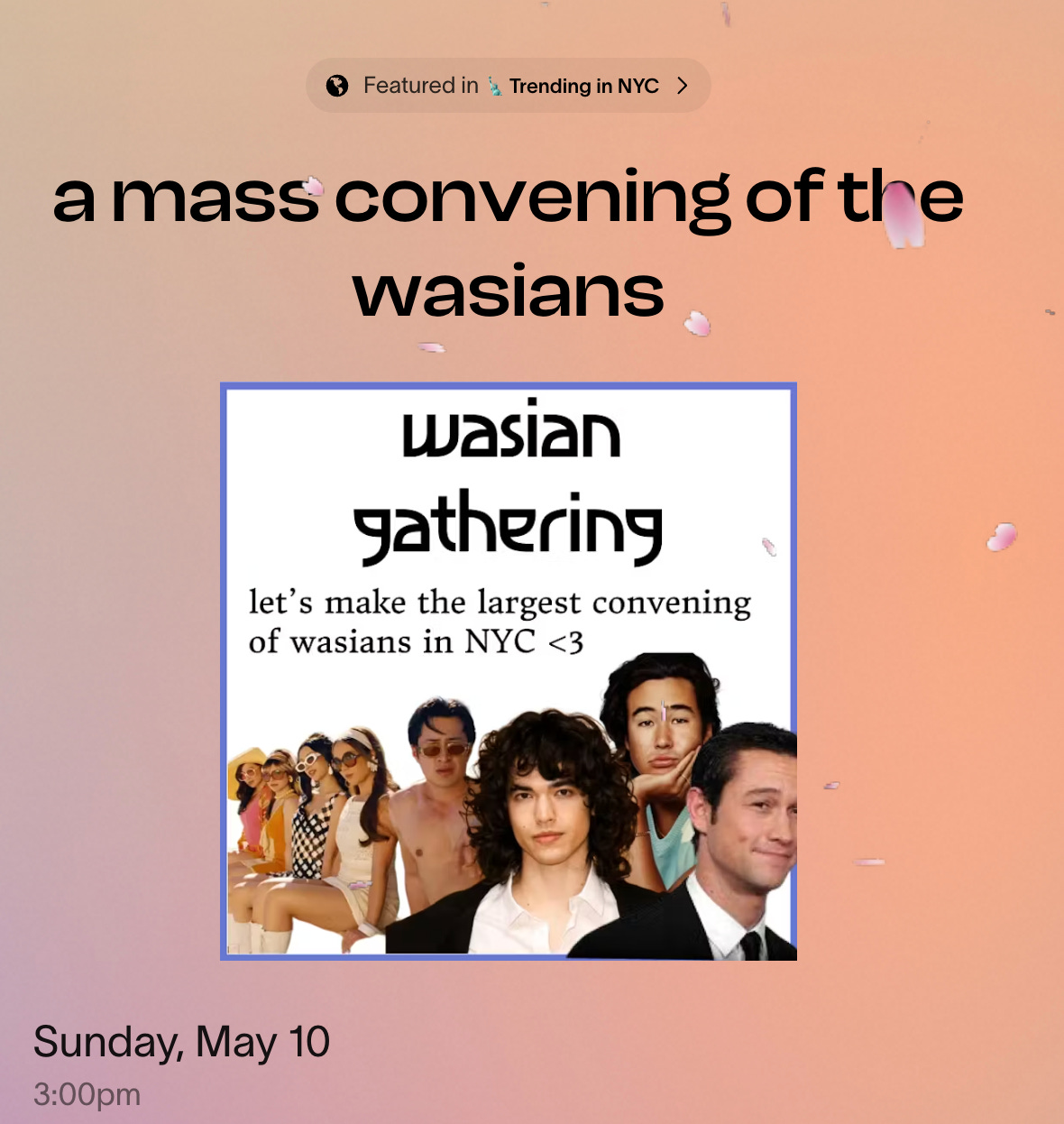
It’s like the Partiful gods1 were listening, because when I saw The Mass Convening of the Wasians on the app’s ‘Trending’ feed, I pounced. The title alone spiked my cortisol levels. As a half Colombian, half Korean/Japanese guy (‘Lasian’ or ‘Latasian’ — your pick), this event felt like the ugly crystallization of America’s sudden embrace of Wasian culture. But before I immediately chugged the Wasian haterade, I took a beat and flocked to Sheep’s Meadow on a Sunday afternoon to find what exactly the hype was all about.
The event attracted a sea of Wasian folk. I watched lookalike contests for several Wasian celebrities (I saw some medicore Hudson Williams impersonators but a pretty spot-on Alysa Liu one), made some awkward ‘what kinda Asian are you?’ small talk, listened to a Wasian bro DJ that reminded me of the jocks I went to high school with, all the while trying to locate the cultural center of gravity of this event.
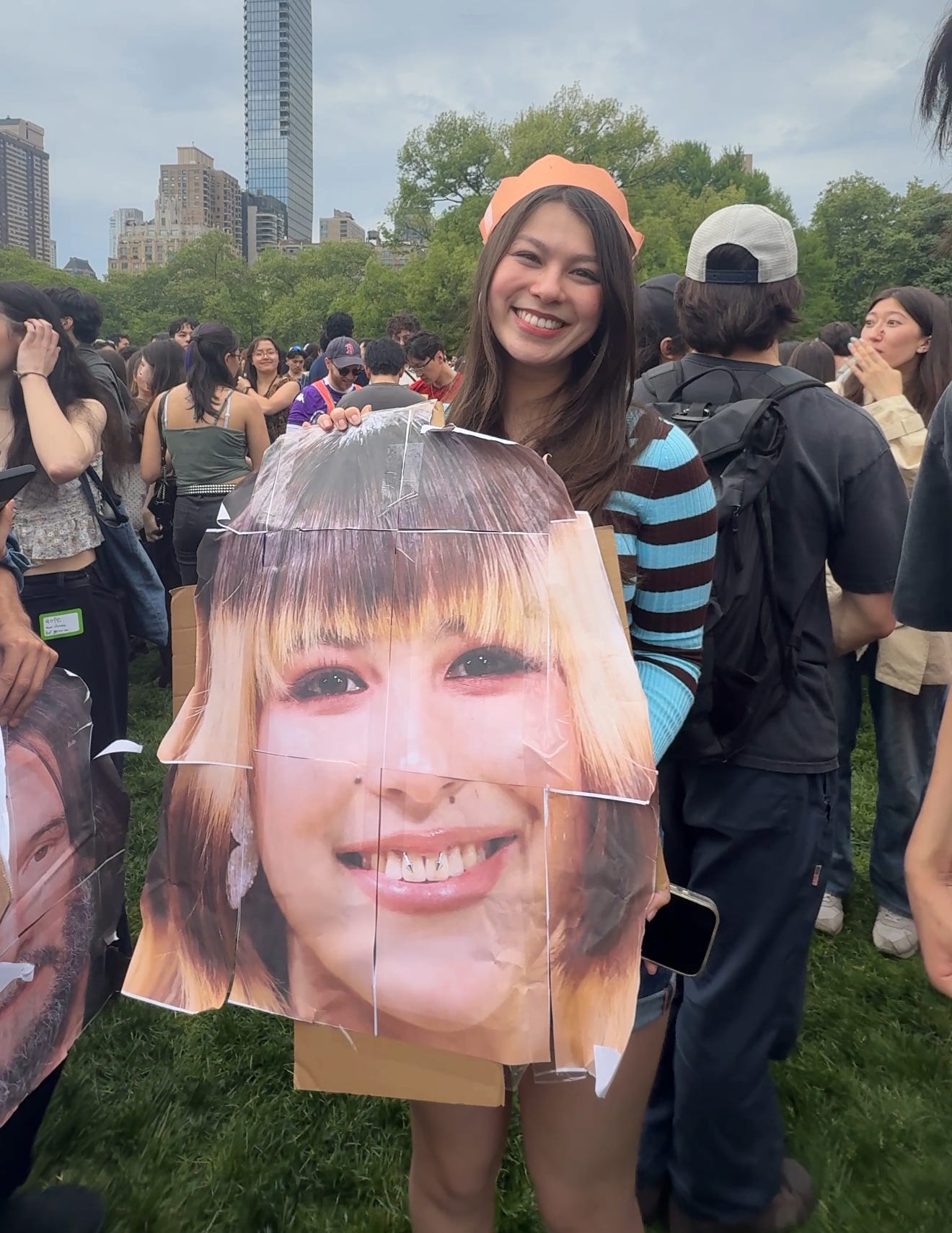
The event was harmless overall, and it was nice making some new friends…but I left it feeling a bit unsettled.
Because here’s what I couldn’t shake: nobody there could tell me what Wasian culture actually is.
When I asked passersby what unified the Wasian community, I got no consensus. Some said “having a traditional Asian mom”, but that excluded the many Wasians with white moms. Others said the feeling of not belonging fully to either side. Valid, but where does that leave other mixed-race Asians? Someone offered that Wasian includes all mixed Asians, not just white ones. At which point the category dissolves into meaninglessness. And when I asked one of the event’s hosts what unifies the community, she said: “We take pride in our beauty.”
Is that a Christina Aguilera you-are-beautiful-no-matter-what-they-say kind of beauty? Or worse — a we-are-hotter-than-everyone kind of beauty?
Why “wasia” and why now?
For the unacquainted, or for those who’ve never ventured to the Bay Area or Park Slope, a Wasian is a person with White and Asian heritage. Being Wasian isn’t new. White and Asian people have been miscegenating throughout history. But the obsession and the term is.
From Hudson Williams’ Heated Rivalry fame to Alysa Liu’s record-shattering Olympic run, we’re witnessing Wasian-ification everywhere. So much so that even NPR has labelled this moment as the “Republic of Wasia.”2 This fad also coincides with the ‘Asia’ embrace in our culture too. From Chinamaxxing to ragebaity Tokyo street interviews on TikTok, being Asian is no longer uncool, but America’s latest fascination, neatly woven into our cultural fabric.3
But this wasia-ssance4 is different from the Internet’s broader Asian embrace.
Wasia’s popularity is insidious because the identity will always be defined in relation to whiteness. You can’t be Wasian without the hard 'W.' And that distinction matters more than it might seem.
What is Wasian pride, anyway?
Wasianness is hollow because it isn’t rooted in anything beyond phenotype. There’s no shared history, no cultural heritage that exists independently of the way they look.
Sure, there is a shared element of feeling like you don’t belong in either culture in the Wasia world that even I can relate to. The Wasian label gives that feeling a specific name and a community. I even spoke to a 40-year-old Wasian mother at the event. She lit up describing what it meant to finally see so many people who looked like her — something she’d never had growing up in Texas. But if Wasia is meant to encompass the vastness of mixed-Asian identity, then we are in desperate need of a name change. You cannot include whiteness in your label and then claim to represent everyone.
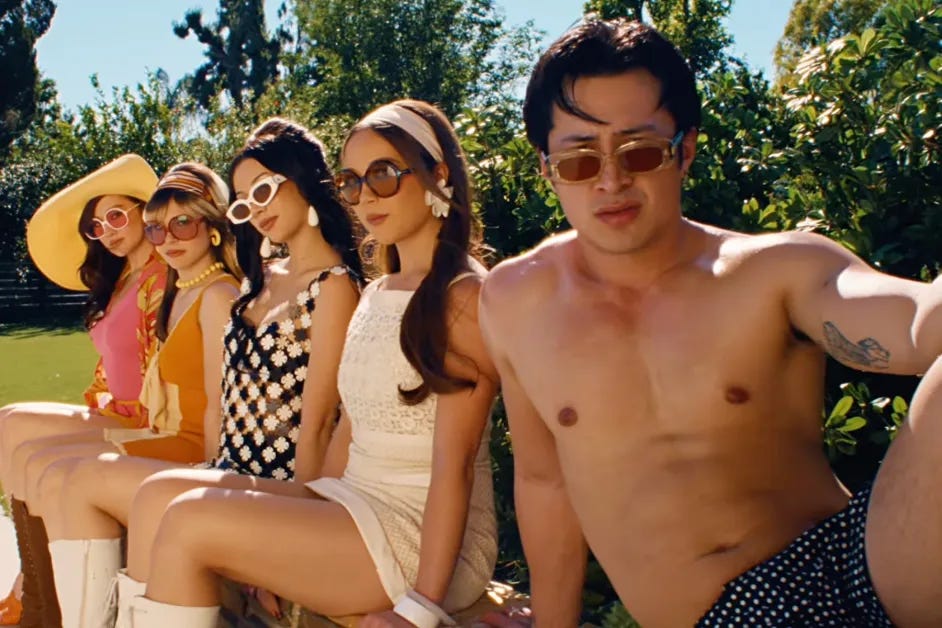
Wasia wasn’t built in a day. Mostly because whiteness helped construct it for centuries.
Compare that term to any of the other Asian identity markers that actually did political work. The term Hapa was a political tool used by Hawiians to build solidarity across ‘mixed’ Asian communities under colonial rule. Identity markers like Asian-American or AAPI emerged in the 1960s from the pan-Asian solidarity movement against white supremacy. These were identities built in opposition to something. Wasian is built in proximity to something. Specifically, whiteness.
So, then, what cultural and political weight does ‘Wasian’ hold?
When Icelandic-Chinese singer Laufey exclusively featured fellow Wasians in her “Madwoman” music video, she framed it as representation: "Growing up, I felt a general lack of representation for people who looked like me in music and media." But representation of what, exactly? A phenotype? Because if Wasian identity begins and ends with aesthetics, that’s eugenics.
Hollywood’s Wasia Card
This is where the stakes become much higher than a celebration on a Sunday afternoon at Sheep’s Meadow.
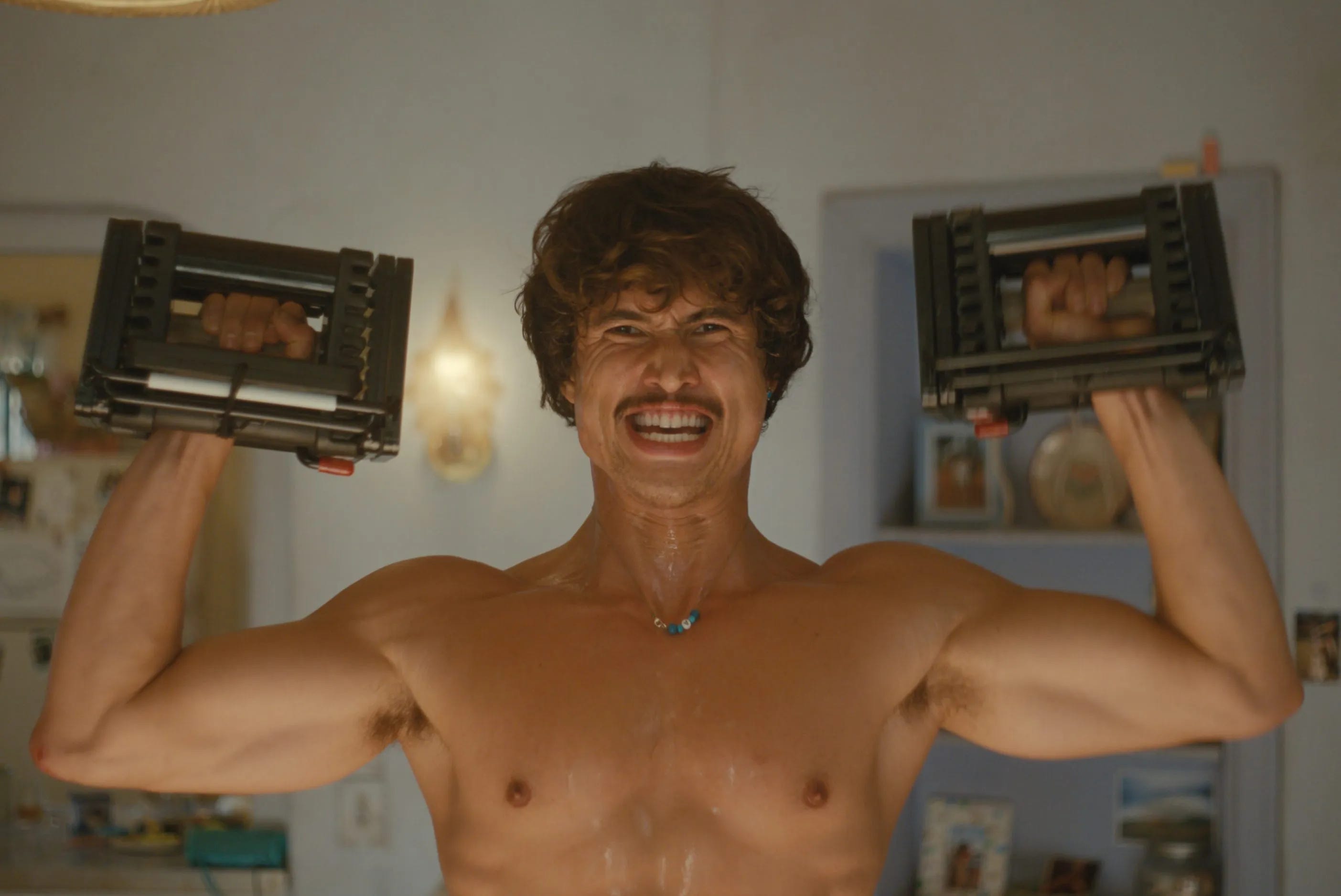
Look at Hudson Williams in Heated Rivalry or Charles Melton in the latest season of Beef. Both incredible Asian actors who have gone on the record to say they embrace their heritage. But their ascent as lead Asian actors in Hollywood in the year 2026 will never not be processed through the prism of whiteness. The features read as exotic but not too foreign. The audience is comfortable (and frankly attracted to them) because there’s a palatable reference point to their look.
And here’s the kicker: by casting Wasian actors as lead Asian roles, Hollywood doesn't have to reckon with the clunky breadth of the mixed-Asian diaspora — the dark-skinned, the non-White, non-East Asian — because it can point to the Williamses and Meltons as their brave act of inclusion. The representation is real enough to deflect criticism (they are obviously Asian - I’m not denying that). But it’s unfortunately not structural enough to propel any real change towards diverse Asian representation. My fear is that as we continue witnessing more Wasian people in film, TV, and music, they will be prioritized as the ‘aspiratioinal’ Asian phenotype.
And let’s be real here, the culture industry didn’t start casting Wasians because it finally gave a damn about mixed-race Asians. It discovered them because they’re palatable.
JAPAN’s WASIA OBSESSION 🇯🇵😍
What unsettles me most is all of this feels like deja vu.
I lived in Japan for almost two decades. It’s my home. And America’s recent wasia-ssance is something that Japan had been doing for decades…they just called it the Hafu (ハーフ) experience. Hafu (ハーフ) is a term that technically means half-Japanese, but the implicit definition here is that the other half is White.
Growing up, I was constantly met with confusion when I had to clarify to my Japanese hairdresser or the nosy obasan working at my neighborhood dry cleaner that my father was not in fact white, but a 5’7, bald, brown-skinned Colombian man.5
After coming out with my real mix, I was usually met with an awkward 「ああ、そうなんですね。」— oh, that’s interesting — before the subject gets changed.
This ha-fu obsession in Japan comes from the colonial desire to have whiter, Eurocentric features. It manifests in small but structural ways, like when my Japanese friends from childhood kept telling me they wish they had lighter brown eyes like mine, or a taller nose like their favorite hafu celebrities.
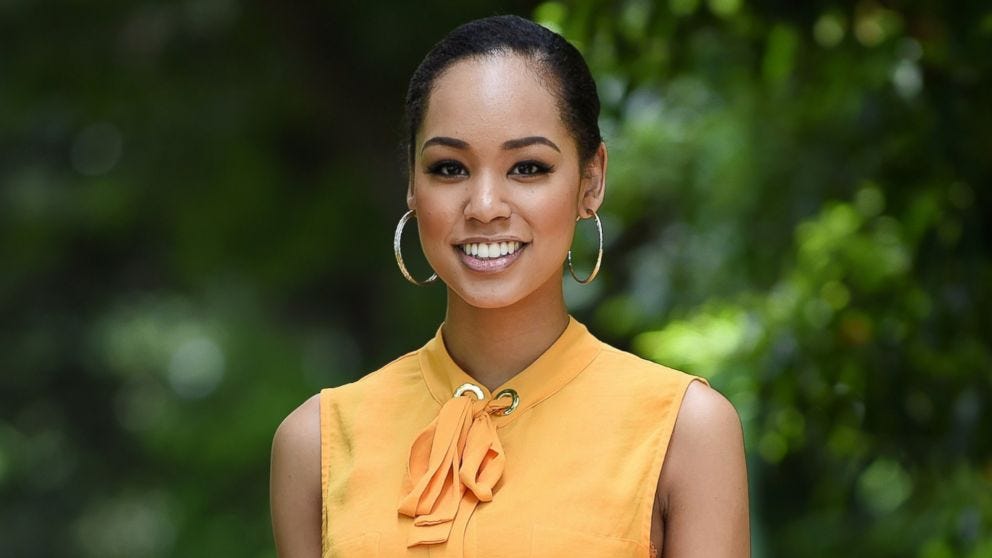
Miss Universe Japan (2015), Ariana Miyamoto
Now, sure this changed a lot in Japan. Tennis champion Naomi Osaka and Ms. Universe Japan Ariana Miyamoto, both Black-Japanese ‘blasian’ celebrities, exist as proof that hafu can mean something other than white-adjacent. Both were celebrated as icons, sure. But they were also subjected to a specific, vicious strain of xenophobia that their white-adjacent hafu peers were not. Compare their reception to someone like Rola — Bengali-Japanese-Russian model, but whose lighter features and Eurocentric look made her one of Japan’s most celebrated ‘Hafu’ celebrities despite having little white heritage. So the hierarchy isn’t even about whiteness specifically. It’s about which features read as ‘European enough’ to be desirable.
So that’s why I watch with skepticism, as America falls into the same ha-fu playbook with this Wasian celebration in the great Trumpian year of 2026. I worry that cultural institutions like Hollywood aren't discerning enough to tell the difference between celebrating mixed-race identities and actually pushing for the diverse Asian representation we deserve.
I rode the A train home from Sheep’s Meadow with the organizer’s words replaying in my head. “We take pride in our beauty.” Pride is fine. Pride is good, even. But pride in a look that was specifically engineered by colonialism, perpetuated by Hollywood, sustained by a century of proximity politics — to be the acceptable face of Asianness?
Miss me with that, please.
we <3 surveillance tech
if we’re living in a wasian republic, call me texas cuz im seceding.
thank you Chinese yodeling lady and every Asian mukbanger on my feed for continuing to carry that torch
copyright me.
sorry dad, dont come for me love you
“if Wasian identity begins and ends with aesthetics, that’s eugenics.” a word. I am Japanese and Haitian and I am thinking of writing my first article related to this wasia renaissance because it is starting to get very sinister.
Finally we’re getting this conversation started! Feel very similarly in my skepticism of this “wasian renaissance” as a non-white mixed Asian myself (I’m Blasian). And on the note of representation — overseas there have long been tons of notable actors, celebrities, models, etc. in media that are wasian. So when there’s claims of “nobody looking like me,” I wonder if what’s being looked for is specifically “wasian American.”